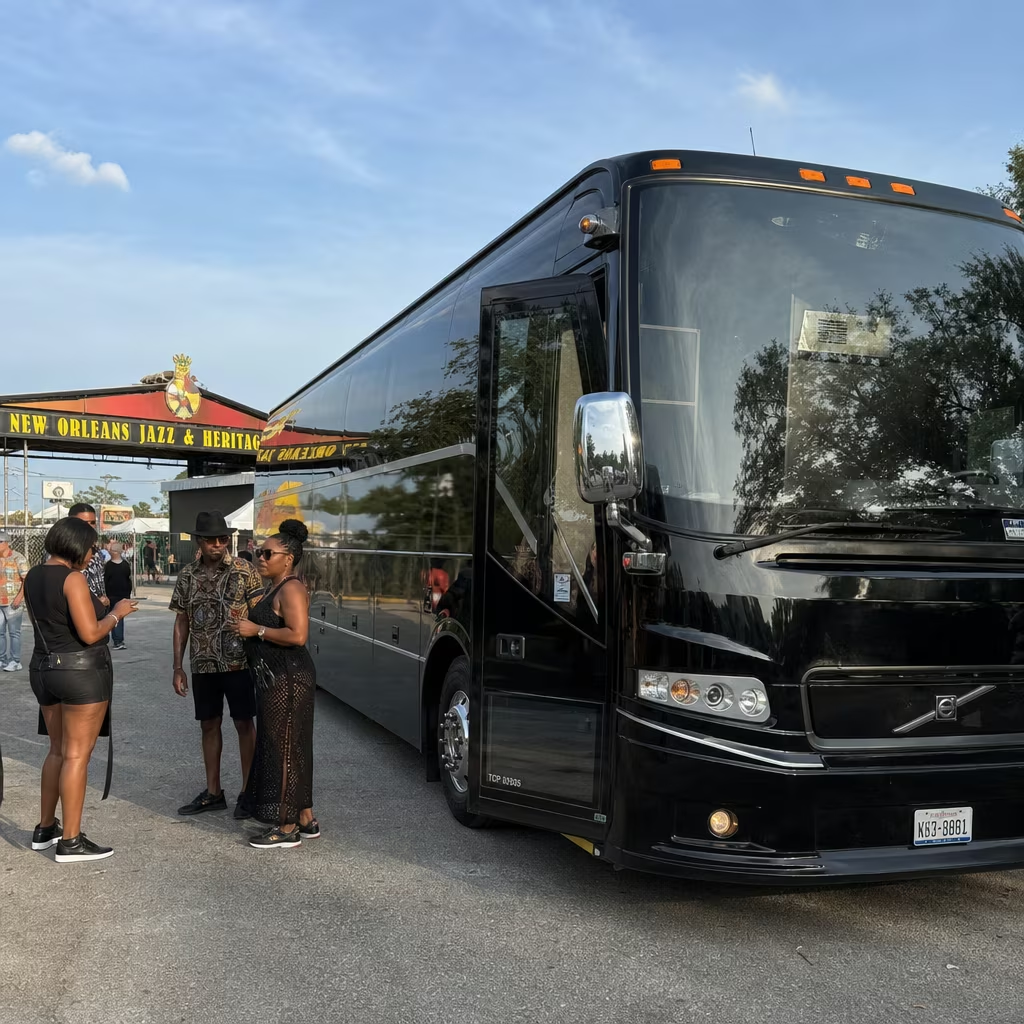
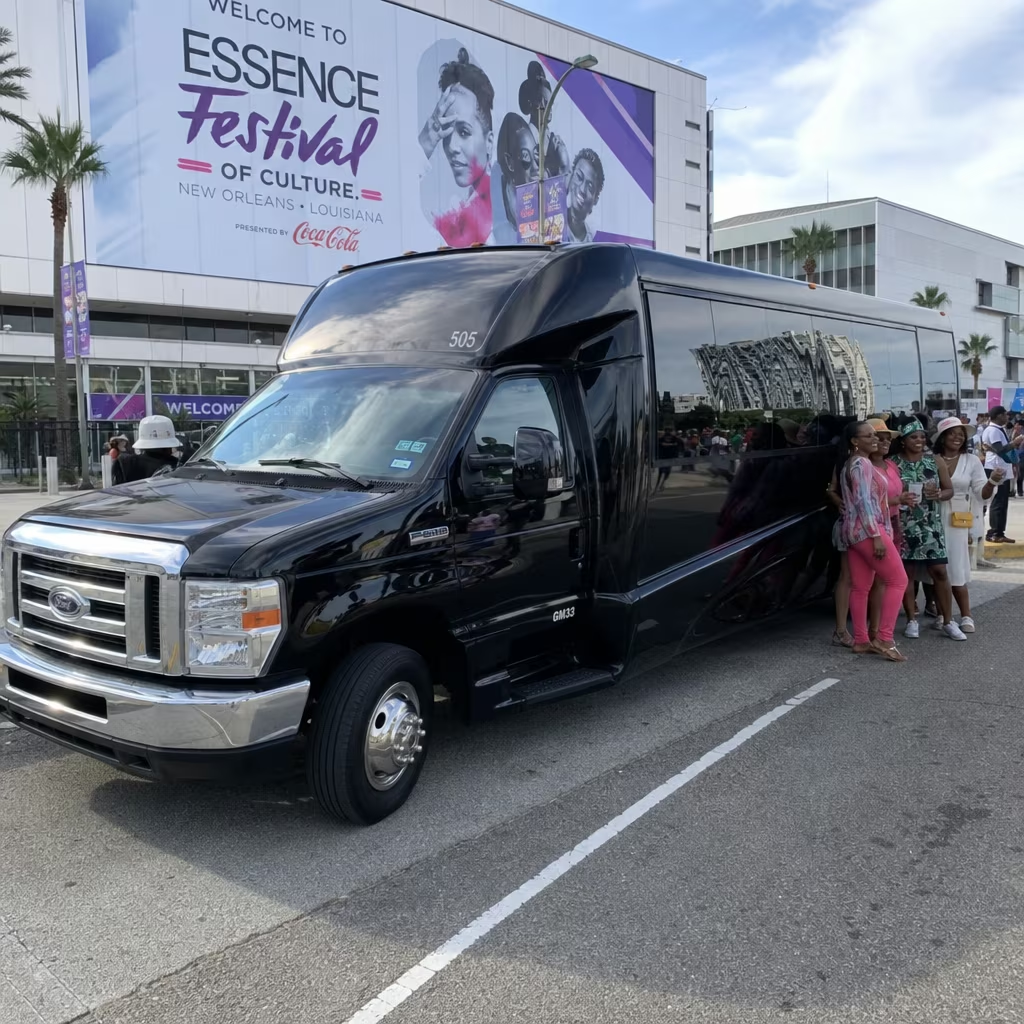
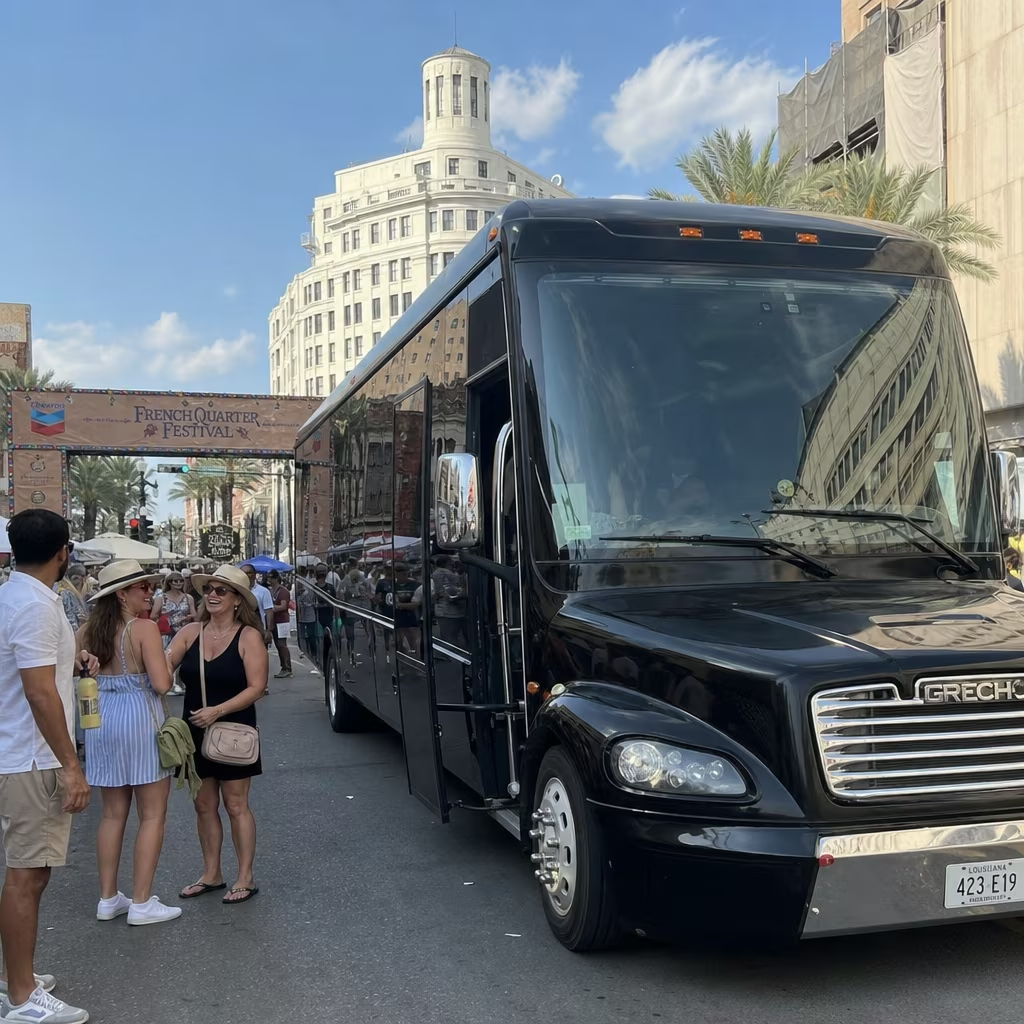
Here is the problem nobody tells you about until it's too late: the moment you start coordinating a group for Mardi Gras, the festival stops being a party and starts being a logistics job. Twenty people, maybe thirty, all flying in from different cities, staying at different hotels, and trying to land at the same stretch of St. Charles Avenue before the first float rolls past. The scramble for rideshares during Super Krewe weekend — surge pricing, limited pickup zones, and a city that has formally closed half its streets to vehicles — is exactly the chaos that turns Carnival into a headache before the beads even start flying.
A New Orleans party bus rental cuts through all of it. One vehicle, one pickup, one coordinated drop-off near the parade route, and the whole group together from the first toast to the last second line. This guide covers what a first-timer — and even a Mardi Gras veteran organizing a larger crew — genuinely needs to know: the parade calendar and which weekends actually matter, what the city does to its roads during Carnival season, where a bus can realistically get your group close to the action, and what it costs.
We do these pickups every Carnival season, so the logistics below come from doing it, not from a tourism brochure.
Mardi Gras Day 2026
Tuesday, February 17, 2026
Peak Parade Weekend
Feb. 11–17 — Valentine's Day & Presidents' Day overlap
Parades begin rolling
Friday, February 6, 2026
Streetcars suspended
Feb. 12 onward (Canal, St. Charles, Rampart lines)
Bourbon St. full closure
Feb. 9 from 5 p.m. through Feb. 14 at 5 a.m.
Best group size for a bus
15–56 passengers in one vehicle
The Mardi Gras 2026 Calendar: What Your Group Actually Needs to Know
Mardi Gras is not a single night. It is a rolling 12-day parade season that builds in scale and crowd size until it peaks on Fat Tuesday, and the dates your group picks will shape every transportation decision you make. Float parades roll nearly every day in New Orleans from Friday, February 6 through Mardi Gras Day on Tuesday, February 17, 2026 — but the two weekends within that window are where transportation pressure is most intense.
The first weekend (February 6–8) draws enthusiastic crowds but is still manageable in terms of parking and rideshare availability. The second weekend — February 12–15 — is when the Super Krewes take the streets, and the city transforms into one of the most congested environments in the country. The official New Orleans parade schedule covers every krewe, but the headliners that matter most for group transportation planning are:
- Krewe of Endymion — Saturday, February 14, 4:00 p.m. One of the largest parades by float count and rider participation in the world, Endymion begins at City Park Avenue and Orleans Avenue and moves down Canal Street, ending at Caesars Superdome. The route cuts through Mid-City into the CBD, and the approach corridor is closed to most vehicles by early afternoon.
- Krewe of Bacchus — Sunday, February 15, 5:15 p.m. Bacchus kicks off at Napoleon Avenue and Tchoupitoulas Street, rolls down St. Charles Avenue under the iconic live oak canopy, and ends at the Convention Center and Henderson Street. This is the most photographed parade route in New Orleans for a reason.
- Krewe of Orpheus — Monday, February 16 (Lundi Gras), 6:00 p.m. Orpheus follows the same Uptown route as Bacchus — Napoleon Avenue and Tchoupitoulas, then down St. Charles to the Convention Center at Henderson Street. Lundi Gras night is relentless; the streets are packed, the energy is at its highest before Fat Tuesday, and rideshare availability is nearly nonexistent by 8 p.m.
- Krewe of Zulu — Fat Tuesday, February 17, morning and Rex — Fat Tuesday, February 17, 10:00 a.m. These two iconic krewes march on Mardi Gras Day itself along the traditional Uptown-to-Canal route. Rex officially closes Carnival season in the afternoon. By midday on Fat Tuesday, the entire corridor from Napoleon to Canal Street is gridlocked, and large portions of the French Quarter have been closed to vehicles since the night before.
The key insight for group transportation: if your crew is here for any one of those five parades, you are showing up on the same day as hundreds of thousands of other visitors. Parking near the route is gone by noon. Rideshare surge pricing starts before the first float rolls.
The window to drop a group close to the action and pick them up afterward is genuinely narrow — and it requires a plan made in advance, not improvised on the curb. Call 504-459-0899 to get that plan in place.
What New Orleans Does to Its Roads During Carnival
Mardi Gras is the single biggest annual disruption to New Orleans traffic patterns, and the closures are more extensive than most first-timers expect. Understanding them is what separates groups that arrive early and relaxed from groups that spend 45 minutes hunting for a parking spot that no longer exists.
Parade-route closures. Streets along parade routes close to vehicles two hours before a parade begins and remain closed until the route is cleared after the parade passes. That means the Napoleon Avenue staging area, St. Charles Avenue, Canal Street, and the surrounding side streets are all restricted for most of the afternoon and evening on Bacchus and Orpheus days.
Large vehicles — box trucks, oversized trailers — cannot park within two blocks of a parade route four hours before or after it rolls.
Bourbon Street and the French Quarter. Starting at 5:00 p.m. on February 9, Bourbon Street from Canal Street to Dumaine Street is closed to vehicular traffic through 5:00 a.m. on February 14. Entire blocks of St. Ann Street, Orleans Avenue, St. Peter Street, Toulouse Street, St. Louis Street, Conti Street, Bienville Street, and Iberville Street are simultaneously closed to vehicles.
During the second weekend, the French Quarter goes into full vehicle lockdown — this is not a suggestion, it is a physical barrier enforced by NOPD. Any plan to drop a group on Bourbon Street after sundown on a parade weekend is not a plan; it is a wishful guess that will fail.
Streetcar suspension. Starting Thursday, February 12, the RTA suspends streetcar service on the Canal Street and St. Charles lines. The Rampart streetcar line suspension begins Saturday, February 14.
Replacement bus service runs 24 hours along those routes through Mardi Gras Day, and ferry service is expanded on parade days — but anyone assuming they can hop the St. Charles streetcar to get close to the Bacchus route on Sunday evening will find that car sitting in a barn. Normal transit service resumes Wednesday, February 18. The full RTA guide for 2026 is available at norta.com.
I-10 and inbound corridors. I-10 into New Orleans is predictably jammed during Super Krewe weekends. The city issues more than 20,000 event-specific citations annually during Carnival season — the parking enforcement is real, and tow trucks run continuously along restricted streets.
Parking along or near a parade route is the single most reliable way to turn a Mardi Gras trip into a $200 towing bill. We always recommend checking the official NOLA Ready transportation page before any parade-day run for the latest closure details.
Charter Bus vs. Every Other Option: An Honest Comparison
We're a bus company, but we'll be straight: a private bus isn't the answer for everyone. Here is how the options actually stack up for a Mardi Gras group.
| Option | Cost shape | Arrive together? | Works during parade closures? | Best group size |
|---|---|---|---|---|
| Private charter bus or party bus | One flat rate split by the group | Yes — one vehicle, one arrival | Best — coordinated drop and pickup outside closure zones | 15–56 |
| Rideshare (Uber/Lyft) | Per car each way + surge (3x–5x on Super Krewe nights) | No — multiple cars, multiple ETAs | Poor — cars avoid closed zones; pickup locations shift constantly | 1–4 per car |
| Self-driving and parking | Gas + parking ($20–$50/day if you find a spot) + tow risk | No — caravans split up | No — most route-adjacent lots are gone by 10 a.m. on parade days | 1–2 cars only |
| RTA bus (parade-day replacement) | Low — fixed fare | No — group must all board same bus independently | Partial — detoured routes, standing room only on Super Krewe days | Any, but uncoordinated |
| Pedicab / walking | Low to moderate | No — limited capacity per vehicle | Best foot access — no vehicle closures apply | 1–4 per pedicab |
The honest read: for one or two people staying in the French Quarter who just need to wander to Canal Street on their own schedule, walking and pedicabs are perfect. For any group past five or six people — especially one that includes older members, guests who are not nimble in crowds, or a crew that wants to move between multiple neighborhoods across a single day — the coordination cost of separate rideshares on Super Krewe weekend turns into real money and real frustration fast. A single New Orleans party bus rental folds all of it into one predictable number and keeps the group together from the hotel pickup to the last parade float.
Where a Bus Can Actually Get Your Group During Mardi Gras
This is the part that most party bus pages skip entirely, and it's the most important operational question for a Mardi Gras group. The answer changes depending on which parade you're watching and what day it is — so here is the honest breakdown by zone.
The Uptown Parade Route (Bacchus, Orpheus, Rex, and Most Major Krewes)
The core Uptown parade route runs Napoleon Avenue to St. Charles Avenue to Canal Street and ends near the Convention Center and Henderson Street. Parade-route closures begin two hours before rollout, so for a 5:15 p.m. Bacchus start, St. Charles Avenue and its immediate cross-streets are restricted to vehicles by roughly 3:00 p.m.
A bus dropping your group before that window — targeting the Uptown side of the route, near Napoleon Avenue and St. Charles, before 2:30 p.m. — can get the group within easy walking distance of prime viewing spots. Post-parade pickup follows the same logic: once the route is cleared and restrictions are lifted, the bus can re-approach to collect the group.
If your group is planted along the St. Charles Avenue neutral ground, the best coordinated staging is along Tchoupitoulas Street, which runs parallel to St. Charles closer to the river and stays open longer during parades. Buses use the blocks nearest to Napoleon Avenue or Jefferson Avenue as a staging corridor while the group watches from the avenue itself. A specific pickup time and a specific cross-street — agreed on before the group disperses into the crowd — is what makes the post-parade pickup clean instead of chaotic.
Canal Street and the CBD (Endymion, Rex, Zulu)
The bottom of Canal Street near the Superdome and the CBD is the endpoint for Endymion and the traditional finish zone for Rex and Zulu. Basin Street and Poydras Street are the most accessible drop-off corridors for the Canal Street viewing area on nights when Canal itself is reserved for parade traffic. Groups heading to watch Endymion from the Canal Street grandstand zone or the Superdome-adjacent area are best dropped at one of these cross-streets with a clear landmark for the post-parade pickup.
The Civic Center Parking area on Loyola Avenue and the Whale Wall lot have historically been used for bus staging during Superdome events — confirm current access with us when you book.
The French Quarter and Bourbon Street
The most important thing to understand about the French Quarter during the second Mardi Gras weekend: vehicles cannot enter most of it. Bourbon Street is physically closed from Canal to Dumaine starting February 9 at 5 p.m., with surrounding blocks restricted simultaneously. A bus drops your group at the edge of the Quarter — on Canal Street, on Decatur Street near the river, or on Rampart Street on the lakeside — and the group walks in from there.
The walk from the Canal Street edge to the heart of Bourbon Street is less than four blocks. That's the plan. Any arrangement that promises a bus will pull up to Bourbon Street at midnight during peak weekend is not based in reality.
Convention Center and Mardi Gras World
For groups visiting Mardi Gras World (1380 Port of New Orleans Place, New Orleans, LA 70130) — the massive float-building den and museum that is one of the most popular pre-Carnival group tours — drop-off is directly next to Hall J of the Ernest N. Morial Convention Center. Group tours at Mardi Gras World include access to a designated bus loading area along Port of New Orleans Place. Convention Center Lot G (355 Henderson St.) offers oversized vehicle parking at approximately $42 per vehicle for groups arriving independently.
Call Mardi Gras World directly at (504) 361-7821 before your visit to confirm current bus parking arrangements, since Lot G can be closed for convention events without advance notice to visitors. The Mardi Gras World getting here page has the most current access guidance.
Which Vehicle Fits Your Mardi Gras Group?
Mardi Gras groups come in every configuration — a bachelorette crew of 14 hitting Bourbon Street on the first weekend, a 40-person family reunion coordinating across the Bacchus route, a corporate group shuttling between the Convention Center and the French Quarter across multiple days. The right vehicle is the one that seats everyone comfortably while still being maneuverable enough to navigate the narrowing street grid as parade-day closures take effect.
| Vehicle | Typical capacity | Best for | Key amenities |
|---|---|---|---|
| 14-passenger Sprinter limo | Up to 14 | Small bachelorette crews, VIP groups, hotel-to-route transfers | Premium leather, USB charging, tinted windows |
| Party bus (15–50 passengers) | 15–50 | Celebration groups who want the party to start on the ride over | Built-in bar, color-changing LED lighting, Bluetooth sound, flat-panel TVs, open dance area |
| 15–35 passenger minibus | 15–35 | Mid-size groups, multi-stop neighborhood itineraries, tighter street access | Powerful A/C, plush reclining seats, overhead storage |
| 40–56 passenger charter bus | Up to 56 | Large family reunions, corporate shuttles, convention groups | Reclining seats, climate control, WiFi, power outlets, onboard restroom, undercarriage luggage bays |
A 15- to 35-passenger minibus is often the smartest pick for Mardi Gras specifically — the greater maneuverability for busy city streets means the bus can navigate closer to parade routes before closures take full effect, stage in tighter blocks near the French Quarter perimeter, and exit congested areas more efficiently after the crowds disperse. For groups of 36 or more, a full-size charter bus handles the headcount and provides undercarriage storage for folding chairs, coolers, and all the gear a day on the parade route demands — plus an onboard restroom that matters enormously when every bar in a five-block radius has a 40-minute line. ADA-accessible vehicles are available on request; just let us know ahead of your trip.
Call 504-459-0899 to match your headcount to the right vehicle.
What Does a New Orleans Mardi Gras Bus Rental Cost?
There is no single sticker price, and any company quoting you one without asking about your group size, your dates, and your itinerary is guessing. Charter bus pricing in New Orleans is shaped by a handful of clear factors that are worth understanding before you request a quote.
- Vehicle size — a 14-passenger Sprinter limo and a 56-passenger charter bus are different rates. You never pay for seats you don't need.
- Total hours — how long the vehicle is dedicated to your group, including the wait between drop-off and parade end, and the post-parade return run.
- Date and demand — Super Krewe weekend (February 13–15) and Fat Tuesday (February 17) are peak demand dates. Pricing for those nights reflects that reality. The first weekend of Carnival is more flexible.
- Itinerary complexity — a single hotel-to-route-and-back trip prices differently than a multi-stop day that includes Mardi Gras World in the morning, the Uptown route in the afternoon, and Frenchmen Street at night.
For real hourly ranges to anchor your estimate: 14-passenger Sprinter limos run $170–$344/hour; 15–20 passenger party buses run $204–$378/hour; 20–30 passenger party buses run $244–$414/hour; 35–50 passenger party buses and minibuses run $294–$490/hour; and 40–56 passenger charter buses run $150–$300/hour or $1,200–$2,500/day. Pricing depends on mileage, time of year, and vehicle type. The per-person math usually surprises groups in a good way: a 40-passenger charter bus at $2,400 for the day is $60 per person — less than two surge-priced rideshares on Orpheus night, and without any of the regrouping.
Call 504-459-0899 any time for an all-inclusive quote with no hidden costs.
Booking urgency for Mardi Gras: Super Krewe weekend (February 13–15, 2026) and Fat Tuesday (February 17) are among the highest-demand transportation dates in the entire South. Vehicles for those specific nights are committed months in advance — groups that call in late January for Bacchus Sunday frequently find the right-size vehicle is already spoken for. If your Carnival trip is set, lock in the bus the same week you book the hotel.
A Real Mardi Gras Group Itinerary: How It Flows
Abstract logistics become clearer with a concrete example. Here's how a recent Mardi Gras run of ours went for a 38-person group coming in from out of town for Super Krewe weekend.
The group's hotel was in the Warehouse District, a few blocks from the Convention Center. Saturday morning (Endymion day), 10:00 a.m.: the charter bus picked everyone up curbside from the hotel and ran them to Mardi Gras World for a group tour — drop-off at Port of New Orleans Place next to Hall J, bus staged in Lot G. The tour ran two hours. 1:00 p.m.: the bus collected the group and positioned them along Canal Street at a staging point near Basin Street before the corridor closed, dropping everyone with three hours of viewing time before Endymion's 4:00 p.m. roll.
7:30 p.m.: the bus picked the group up at the agreed Canal Street cross-street once the route had cleared, returned to the hotel by 8:15 p.m. Total: 9.5 hours, one 40-passenger party bus, all-inclusive rate of approximately $2,800 — about $74 per person for a full Carnival Saturday that would have cost each person that much or more in surge rideshares alone, without the coordination.
Multi-Neighborhood Mardi Gras Itineraries: Where Else a Bus Takes You
Mardi Gras is bigger than any one parade. Groups who book a bus for the day — rather than just a single parade run — can build an itinerary that spans the neighborhoods that make Carnival in New Orleans genuinely unlike anything else.
Frenchmen Street in the Marigny, a few blocks downriver from the French Quarter, is where locals go when they want live jazz alongside the Carnival energy. The street is walkable from the Quarter perimeter and is among the most accessible Mardi Gras destinations by bus drop-off. Magazine Street through the Garden District and Uptown is lined with galleries, bars, and restaurants that serve as natural anchor points before and after Uptown parade viewing.
Treme, just across Rampart Street from the French Quarter, is home to some of the most authentic second-line culture in the city — Indian tribes and brass bands move through the neighborhood on Mardi Gras morning, and access from the Rampart Street edge is simple for a dropped group. For groups who want to see the float-building culture up close before the parades roll, Mardi Gras World (1380 Port of New Orleans Place) and the warehouse corridors along the river in the Arts/Warehouse District are within easy range of a morning pickup.
The practical advantage of having a bus for a multi-neighborhood day: you're not walking 14 people through the Treme at noon, then figuring out six separate rideshares to get to the Uptown route by 3:00 p.m. The bus runs the connection while the group stays together. For groups hitting multiple Mardi Gras stops in a single day, a New Orleans charter bus rental is what keeps the day coherent.
Mardi Gras Logistics Every Group Organizer Should Know
A few things that consistently trip up first-time group organizers — details that change how the day goes:
- The parade route is not a drop-off zone. Streets along the route are closed to vehicles two hours before rollout and until cleanup is complete. Your bus drops the group before the window closes, at a cross-street a block or two off the route, not on St. Charles Avenue itself. A pickup time and location agreed before the group disperses into the crowd is non-negotiable — trying to coordinate a post-parade pickup on the fly via text when everyone has a different data signal is a genuine nightmare.
- Parking along or near the route results in towing, not a ticket. New Orleans issues more than 20,000 Carnival-season citations annually, and tow trucks are active throughout the night. Off-site commercial lots fill fast and are expensive. One bus cuts out the parking problem entirely.
- The RTA's streetcar lines are suspended from February 12 onward. Groups relying on the St. Charles streetcar to get from Uptown to the Quarter after a parade will find it isn't running. Replacement bus service operates on those corridors, but it runs packed on peak nights. Plan around the suspension from February 12 to February 17.
- Rideshare surge pricing during Super Krewe weekend is severe. Prices of 3x–5x base during parade hours are not unusual. A group of 25 people paying surge rideshare fares from two different locations to reunite at a third location is paying more than a chartered minibus would cost — and arriving in fragments. Lock in the bus before Carnival, not after the first surge bill lands.
- Know your krewe days. Endymion rolls Saturday; Bacchus on Sunday; Orpheus on Lundi Gras (Monday); Zulu and Rex on Fat Tuesday. Each one closes different streets at different hours. Matching your bus booking to the specific parade day — not just "second weekend" — is how you get the right vehicle at the right time. Call 504-459-0899 and tell us which parades your group is targeting; we'll build the logistics around the specific closure schedule for your dates.
The Kinds of Groups We Move Through Carnival Season
Different groups, same goal: everyone arrives together, nobody is stranded on a closed street at midnight, and the Carnival memory is the parade — not the parking situation. A few of the most common runs:
- Bachelorette and bachelor parties. The combination of Mardi Gras and a bachelorette group is one of the most popular Carnival bookings we see. A 15- to 25-passenger party bus picks the crew up from the hotel, runs them to the parade route with energy already built, and keeps the group safe and together through the night — no drawing straws for who has to stay sober. Bourbon Street is the finale, not the parking headache.
- Family reunions and multi-generational groups. Mardi Gras with grandparents, teenagers, and small children requires vehicle planning that accounts for mobility needs and early departure times. A full-size charter bus handles the headcount, includes an onboard restroom for the day on the route, and can drop and pick up at the exact location that works for your group's mobility needs.
- Corporate and convention groups. The Ernest N. Morial Convention Center (900 Convention Center Blvd, New Orleans, LA 70130) hosts major events throughout Carnival season. Shuttling staff or clients between the Convention Center and the parade routes — or between conference hotels and Friday-night Carnival events — is a clean, one-vehicle solution that keeps a business schedule intact while still participating in the city's biggest week.
- Out-of-town groups flying into Louis Armstrong International Airport (MSY). Louis Armstrong International Airport (1 Terminal Dr, Kenner, LA 70062) sits approximately 15 miles from the French Quarter via I-10 — a 20-to-30-minute drive in normal traffic, longer during peak Carnival arrivals when I-10 inbound is heavily loaded. One bus collecting the whole group at MSY baggage claim is the cleanest solution, rather than splitting 30 people into eight rideshares and waiting for everyone to regroup at the hotel. We confirm the terminal layout and pickup process when you book — MSY completed its terminal consolidation in 2022, so everything is under one roof now.
Booking Your Mardi Gras Bus: Timing and What to Have Ready
Booking is straightforward once you've got the basics organized. Here's the process:
- Identify your key parade dates. Which krewes does your group most want to see — Endymion (Saturday), Bacchus (Sunday), Orpheus (Lundi Gras), or the Mardi Gras Day parades? The parade date determines the closure schedule, which determines where the bus can realistically drop and pick up.
- Confirm your headcount and pickup points. Know approximately how many passengers you're moving and whether everyone is at the same hotel or scattered across the city. Multiple pickup points add time to the run; we'll factor that in when we build the quote.
- Request a quote with your specific dates. Call 504-459-0899 or use our online quote tool. Share your group size, hotel location, the parade or event you're targeting, and roughly how many hours you need the vehicle.
- Lock it in. For Super Krewe weekend and Fat Tuesday, the earlier you confirm, the better your vehicle options. These are the highest-demand transportation dates in the South. Do not wait until Carnival season has started.
The booking window that matters: Most Bacchus Sunday and Orpheus Lundi Gras bookings for the right-size vehicle are committed by December. Groups that contact us in January for peak-weekend dates regularly find the best options already reserved. Book by December for Super Krewe weekend; book immediately for Fat Tuesday.
For the first Carnival weekend (February 6–8), lead times are more flexible — two to four weeks is workable, but earlier is always better on rate and selection.
Frequently Asked Questions
Where exactly can a charter bus drop off during Mardi Gras parades?
The drop-off point depends on which parade is rolling and how close to rollout time your group arrives. For Uptown parades (Bacchus, Orpheus, Rex), buses target the Tchoupitoulas Street corridor parallel to St. Charles Avenue or cross-streets on the Uptown end of the route before the two-hour closure window takes effect. For Endymion and Canal Street viewing, Basin Street and Poydras Street are the most accessible vehicle corridors.
The French Quarter is a walk-in zone on peak nights — buses drop at the Canal Street edge or Decatur Street perimeter, and the group walks in from there. When you book, we confirm the specific drop point and pickup location for your exact parade date.
When do street closures start on parade days?
Streets along the parade route close to vehicular traffic two hours before each parade's scheduled rollout time. Large enclosed vehicles cannot park within two blocks of the route for four hours before or after the parade. Bourbon Street and the French Quarter core go into vehicle lockdown from February 9 at 5:00 p.m. through February 14 at 5:00 a.m., with the second weekend enforcing full restrictions.
Check the NOLA Ready transportation page for the most current closure schedule before your trip.
Are the RTA streetcars running during Mardi Gras?
No — not during the peak of Carnival. The Canal Street and St. Charles streetcar lines are suspended starting Thursday, February 12. The Rampart line suspension begins Saturday, February 14.
Replacement RTA bus service runs 24 hours along those corridors through Mardi Gras Day. Normal service resumes Wednesday, February 18. On Super Krewe nights, replacement buses are standing-room-only by evening; plan accordingly.
How far in advance should we book a Mardi Gras bus?
For Super Krewe weekend (Bacchus Sunday, Orpheus Lundi Gras) and Fat Tuesday — book by December at the latest. Realistically, peak-weekend vehicles at the right size begin committing as early as October and November. For the first Carnival weekend (February 6–8), two to four weeks of lead time is workable but earlier is always better on price and vehicle selection.
Call 504-459-0899 as soon as your group's travel dates are set.
How does a bus pick up our group at Louis Armstrong Airport?
Louis Armstrong New Orleans International Airport (MSY) completed its terminal consolidation in 2022 — all arrivals now come into a single terminal at 1 Terminal Dr, Kenner, LA 70062. Commercial pickup is coordinated from the ground transportation area on the baggage claim level. Once your group has collected luggage and is assembled, contact us to confirm the bus's position.
Have everyone meet at the same baggage carousel before heading to curbside — the 15-mile drive to the French Quarter via I-10 takes 20–30 minutes in normal traffic, and noticeably longer during peak Carnival inbound periods. We always recommend consulting flymsy.com for the latest ground transportation guidance before your arrival.
What's the best vehicle for a bachelorette party at Mardi Gras?
A 15- to 25-passenger party bus is the standard pick for a Mardi Gras bachelorette — the built-in bar, color-changing LED lighting, Bluetooth sound system, and open cabin mean the celebration starts the moment the group boards, not when they arrive at the first stop. The party bus drops the crew at the Uptown route for parade viewing, then moves them to the French Quarter perimeter for the night, and picks them up at the end of Bourbon Street — no one stuck trying to hail rideshares at 2:00 a.m. with a 3x surge active. Call 504-459-0899 to check availability for your specific weekend.
Can a bus take our group to multiple Mardi Gras neighborhoods in one day?
Yes — and this is one of the most popular ways groups use a bus during Carnival. A typical multi-stop day might run: morning pickup at the hotel, Mardi Gras World tour near the Convention Center, repositioning to the Uptown route before the afternoon parade closure window, parade viewing, and an evening drop at the Frenchmen Street and Marigny perimeter. The bus holds the group's gear, coolers, and folding chairs in the undercarriage bays throughout the day.
We build the routing around the specific parade closure schedule so the itinerary is realistic, not optimistic. Tell us your stops when you request a quote.
What does a Mardi Gras bus rental cost per person?
The per-person math depends on your group size and vehicle. A 40-passenger charter bus for a full Carnival Saturday — approximately 9–10 hours including parade viewing time, waits, and a multi-stop itinerary — runs in the $2,200–$2,800 range all-inclusive. Split across 40 people, that's $55–$70 per person for the day: less than the surge-priced rideshares most groups pay getting to and from a single parade.
For an exact number based on your specific group, dates, and itinerary, call 504-459-0899.
Book Your Mardi Gras Bus Today
Mardi Gras is the reason New Orleans exists the way it does — the parades, the music, the crowds, the chaos are the point. The logistics of getting 20 or 40 people through it together shouldn't be the thing your group talks about afterward. A New Orleans party bus or charter bus rental means one pickup, coordinated drops at the right spots before the closure windows close, and one phone call to get everyone back at the end of the night — while everyone else is still standing in a rideshare queue watching the surge price climb.
Whether your group is targeting Endymion on Saturday, riding the Bacchus route on Sunday, or lining up along St. Charles for the last parades of Fat Tuesday, the vehicle and the plan are ready. Give us a call any time at 504-459-0899 for an all-inclusive quote — or use our online tool for instant availability. Lock in early.
The best Carnival buses go first.
Sources & Last Verified
Parade schedules, street closures, and transit changes for Mardi Gras 2026 verified in June 2026. Confirm current dates, closure zones, and transit service against the official sources below before your trip, as operational details shift each Carnival season.
- New Orleans Official Guide — Mardi Gras Parade Schedule 2026
- Mardi Gras New Orleans — 2026 Parade Schedule
- NOLA Ready — Mardi Gras Parking & Transportation
- NOLA.com — Mardi Gras 2026 Parking Rules and Street Closures
- WWL-TV — Mardi Gras 2026 Transportation Guide: Parking, Road Closures, and Streetcar Service
- RTA — Mardi Gras Guide 2026 (PDF)
- Mardi Gras World — Getting Here
- Mardi Gras New Orleans — Planning: Parking & Transportation