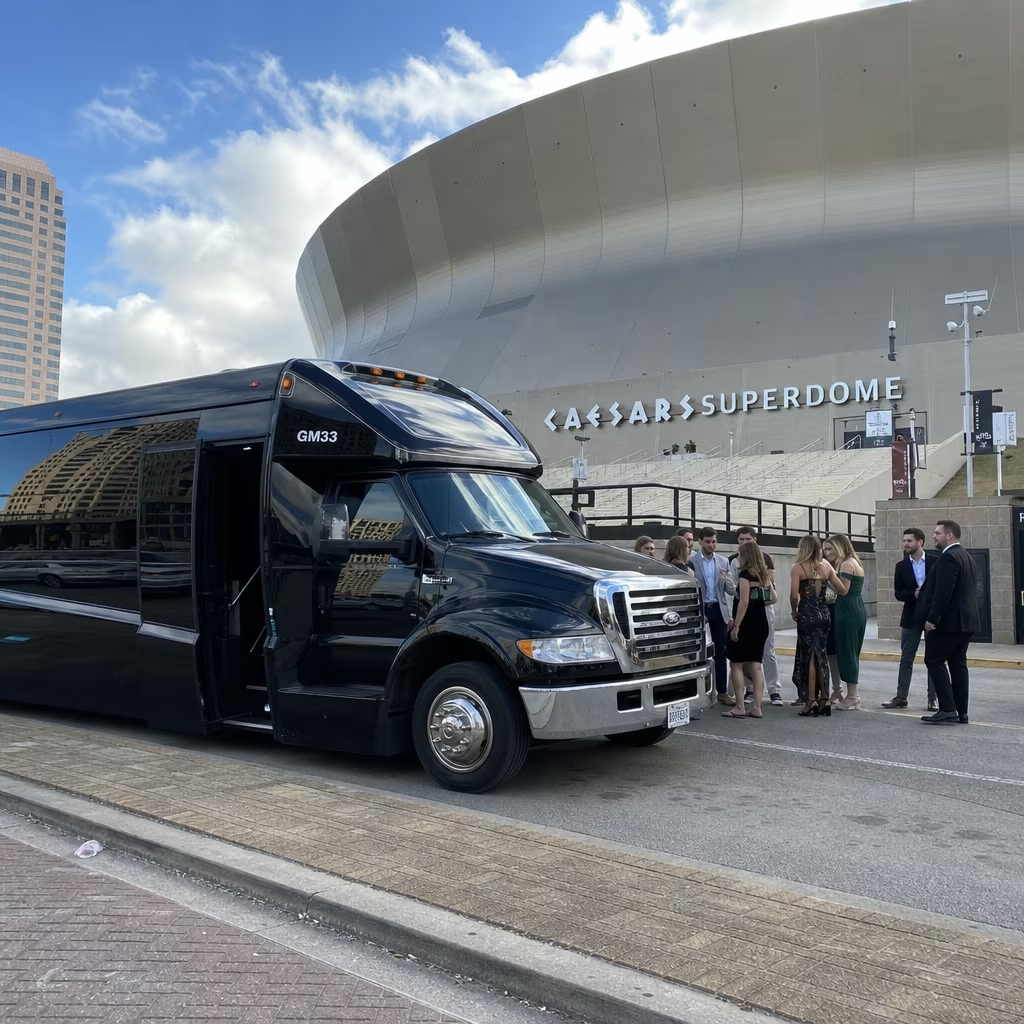
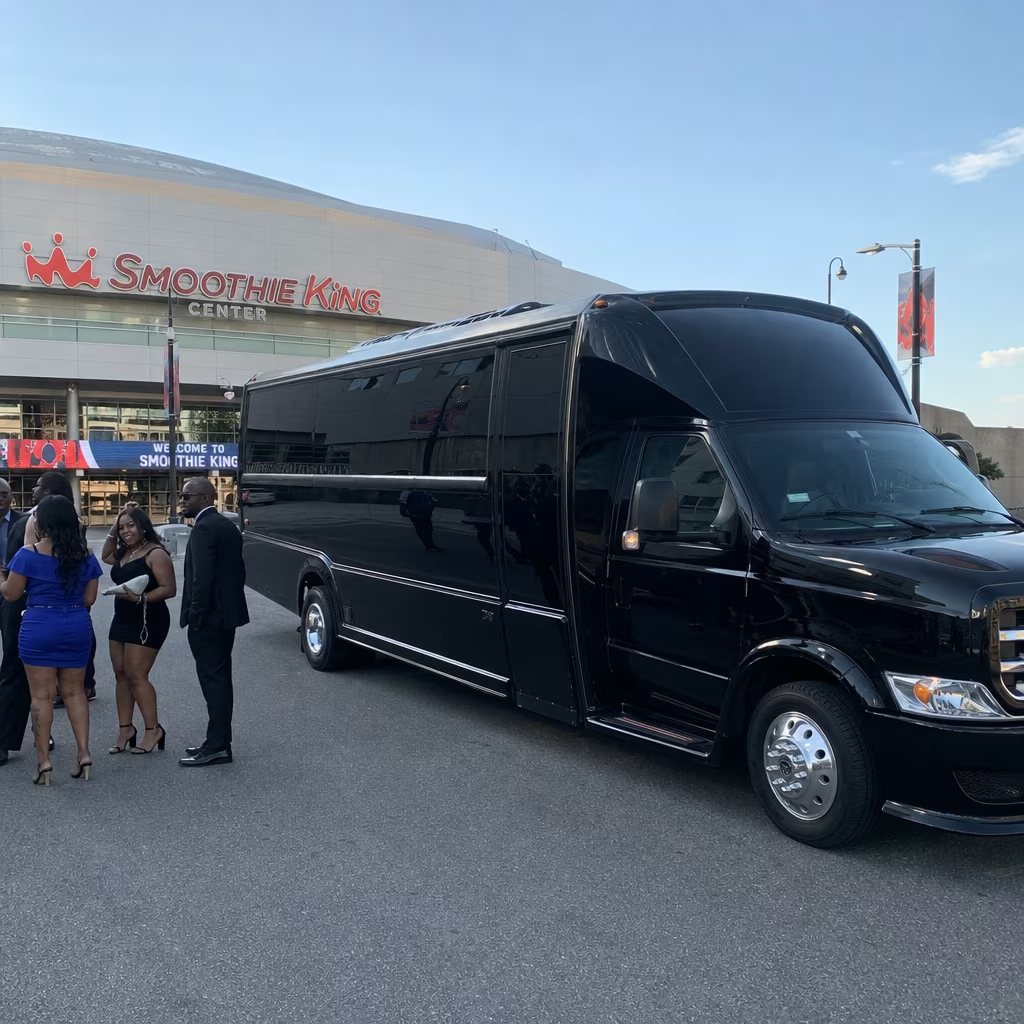
Every football Saturday, thousands of New Orleans fans make the same calculation: it's 80 miles up I-10 West to Baton Rouge, the game kicks off at 6 PM, and someone has to drive home. That's the problem at the heart of every Tiger Stadium trip from the Crescent City — and it's the problem a charter bus from New Orleans to LSU solves entirely. One bus picks up your whole group, handles the I-10 run, drops everyone in the stadium's designated lot, and waits for you when 102,000 fans empty into the Baton Rouge night at the same time.
No designated driver drawing straws, no pre-purchased parking permit to chase down, no 90-minute postgame crawl with everyone checking their phones from a different lot.
Tiger Stadium — known to every college football fan as Death Valley — holds 102,321 people and is the fifth-largest on-campus stadium in the nation. On a home game Saturday, it briefly becomes the fifth-largest city in Louisiana. ESPN ranked it the No. 1 college football stadium in the country in 2024.
The atmosphere is legendary, the parking is a legitimate logistical puzzle, and the drive home from a night game hits post-midnight with contraflow routes that can add 90 minutes to the trip. This guide covers exactly where a charter bus drops off, how buses must approach campus, what the parking situation looks like for groups who drive themselves, what the tailgating rules are, and what the stadium will and won't let through the gates — with every detail sourced directly from LSU's published policies.
Why a Charter Bus or Party Bus Is the Right Call for This Trip
The New Orleans to Tiger Stadium run is one of the most popular group charter routes in Louisiana, and for a straightforward reason: the logistics of doing it yourself are genuinely bad. Baton Rouge campus parking requires a pre-purchased permit — there is no buying one at the gate for most lots. The postgame contraflow can mean 1–3 hours of one-way traffic management on the roads surrounding the stadium.
And if your group is spread across multiple cars, even a short delay at the stadium will scatter everyone across different exits and different wait times on I-10. A New Orleans sporting event bus rental to Tiger Stadium cuts through every one of those issues: one vehicle, one pickup, one parking arrangement, and everyone back together on the same bus when the final whistle blows.
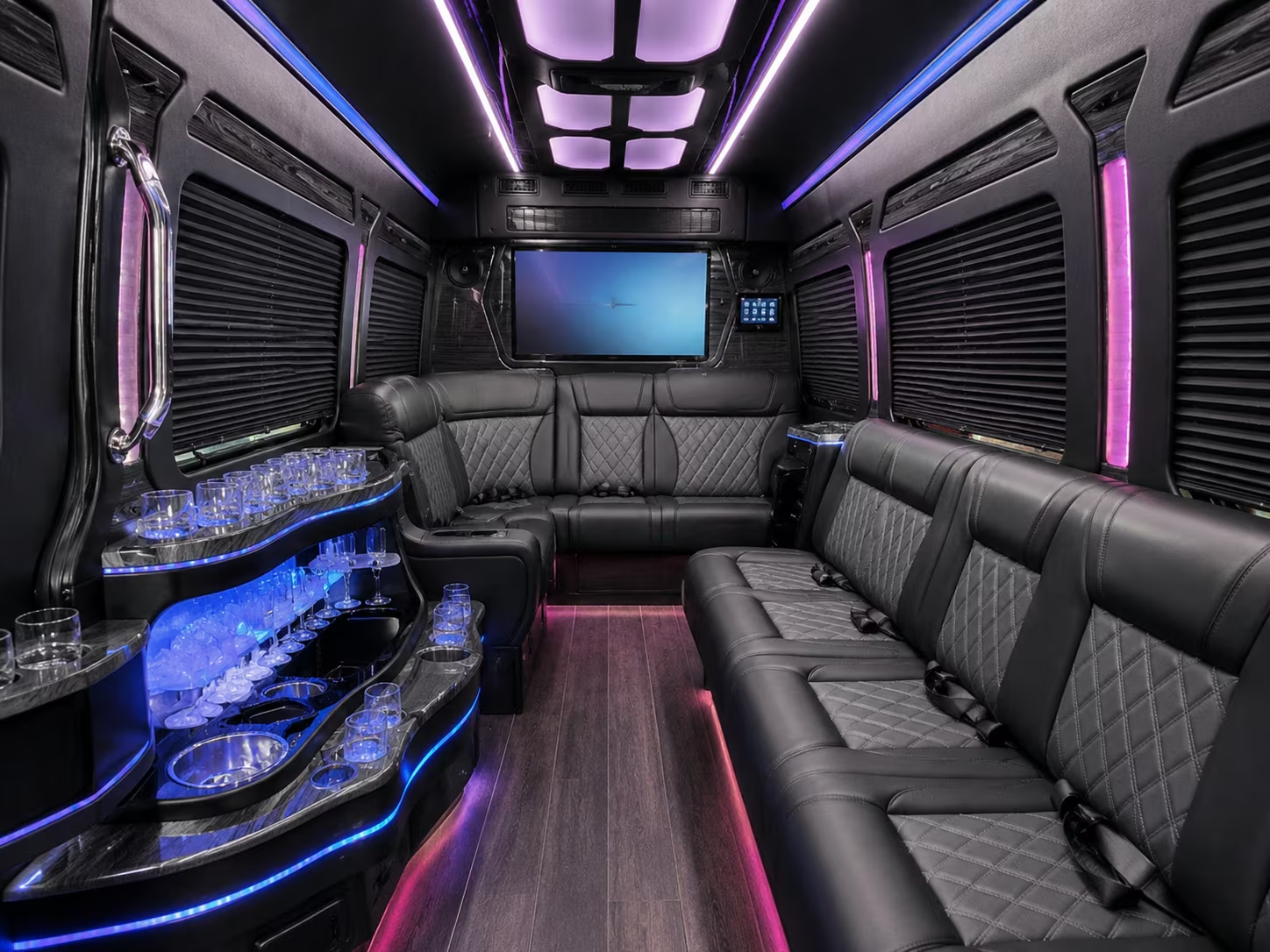
The pregame ride from New Orleans to Baton Rouge matters, too. It's 80 miles of interstate — and a party bus with a 25-passenger layout, flat-panel TVs, LED lighting, and Bluetooth sound turns the I-10 run into part of the game-day experience instead of a chore. A 40- to 56-passenger charter bus is the move for larger groups, with deep undercarriage bays for tailgate gear and an onboard restroom for the ride back at midnight.
The game-day problem isn't getting excited about Death Valley — that part happens on its own. The problem is the logistics of getting 20 or 40 people there and back cleanly. That's what a bus is for.
Charter Bus & Party Bus Drop-Off at Tiger Stadium — Lot 407 on Nicholson Drive
Charter buses and limousines park in Lot 407 on game day, per LSU's official parking policies page. Spaces are first-come, first-served and not guaranteed, so arriving well before kickoff is the plan. Motor homes are not permitted in Lot 407 — that's a separate lot designation.
Buses should approach campus on Nicholson Drive or River Road and may not pass through the interior of campus before or after the game. After the final whistle, passengers must meet the bus back at Lot 407 — the bus does not circulate through campus to pick anyone up at the stadium gates.
That postgame reunion point is worth talking through with your group before kickoff, not after. North Stadium Drive, South Stadium Drive, and West Stadium Drive are all closed to vehicles on game days — so the campus roads immediately adjacent to the stadium are pedestrian-only. Skip Bertman Drive closes for approximately 45 minutes after the game to allow pedestrian flow.
Your group walks from the gates back to Lot 407 on Nicholson Drive, which is a manageable walk and the same path everyone took in — no shuttles required, no remote lot, no guessing. A support team is available at 504-459-0899 to help you think through the postgame pickup window when you request your quote.
Bus parking at Tiger Stadium: Lot 407, approached via Nicholson Drive or River Road. Spaces are first-come, first-served. The bus may not pass through campus, and after the game, your group meets it at the lot — not at the stadium gates, which are on pedestrian-only roads on game day.
Plan the postgame rally point with your group before kickoff.
The 2025 season brought two notable road changes worth knowing: May Street (between LSU Lakes off Dalrymple Drive) is closed for the LSU Lakes Project, and the East Lakeshore underpass is also closed. These affect some approaches across campus — which is exactly why LSU recommends using its custom Waze gameday map for real-time routing to your specific lot. Building your approach around Nicholson Drive from I-10 keeps the bus clear of the interior closures entirely.
The 80-Mile I-10 Run — What the Drive from New Orleans Actually Looks Like
From downtown New Orleans to Tiger Stadium is approximately 80 miles west on I-10, then the final approach into Baton Rouge and onto campus. Under normal conditions, that's 1 hour 15 minutes to 1 hour 30 minutes. On a major home game Saturday — any SEC rivalry matchup, any night game with a 6 PM or 7 PM kickoff — build in at least two hours, and three if you want to arrive early enough for a real tailgate.
The traffic doesn't get heavy on the highway; it gets heavy once you're in Baton Rouge and approaching campus. The Horace Wilkinson Bridge, which carries I-10 over the Mississippi River through Baton Rouge, is the city's biggest bottleneck — a single slowdown on the bridge backs up the entire freeway system heading toward LSU.
Postgame is a different story. LSU implements contraflow — using inbound lanes as egress — for most home games, meaning the roads surrounding campus go one-way outbound for 1–3 hours after the final whistle. The main egress routes are Nicholson Drive (north toward downtown and I-10, or south), Gourrier Avenue to River Road, and campus roads to Highland Road southeast toward I-10.
If you drove yourself and parked on campus, you're in that flow with everyone else. If you're on a bus staged in Lot 407, the bus takes the first cleared route back toward the highway, and your group is recapping the game while someone else navigates the contraflow. That's the difference between getting back to New Orleans by midnight and getting back at 2 AM.
Every Option for Getting Your Group to Tiger Stadium
| Option | Cost shape | Arrive together? | Parking | Postgame | Best group size |
|---|---|---|---|---|---|
| Charter bus or party bus | One flat rate, split by the group | Yes — one vehicle, one arrival | Lot 407, pre-arranged, no permit scramble | Bus waits; group meets at Lot 407 | 15–56 passengers |
| Rideshare (Uber/Lyft) | Per car each way + post-game surge pricing | No — multiple cars, multiple ETAs | None needed, but pickup chaos after the game | Surge pricing after the final whistle; long waits | 1–4 per car |
| Everyone drives and parks | Pre-purchased pass per car + gas per car | No — caravans split up on the highway | Pre-purchased pass required; no day-of guarantee for most lots | 1–3 hours of contraflow with the rest of campus | 1–3 cars max before coordination gets painful |
| Carpool with a designated driver | Gas + parking pass per car | Partially — some cars together | Pre-purchased pass required | Someone stays behind the wheel, group is split between cars | Small groups, 1–2 cars |
For groups of two or three people who are comfortable in a rideshare queue after a night game, driving or rideshare can work. But once you're past a handful of people — and especially once you factor in the designated driver problem on a round trip that could end at midnight or later — one bus is almost always simpler and cheaper per head than coordinating separate cars. A group of 40 on a charter bus splits one flat rate.
Those same 40 people in 10 cars are buying 10 parking permits, filling 10 gas tanks, and making sure 10 people stay sober on a game-day Saturday.
What Size Bus Does Your Tiger Stadium Group Need?
New-orleans-party-bus.com connects you to a wide range of vehicle types through a large network of bus companies serving New Orleans and the surrounding region, so your group size doesn't force you into a vehicle that's too big or too small. Here's how the lineup maps to a Tiger Stadium run.
| Vehicle | Seats | Luggage / tailgate gear | Best for | Key amenities |
|---|---|---|---|---|
| 14-passenger Sprinter limo / Sprinter van | Up to 14 | Modest — a few bags and a cooler | Small groups, VIP groups, suite holders | Premium leather, USB charging, tinted privacy windows |
| Party bus (15–50 passengers) | ~15–50 | Onboard, lighter | Groups wanting the rolling pregame experience on I-10 | Color-changing LED lighting, Bluetooth sound, flat-panel TVs, wraparound seating |
| 15–35 passenger minibus | ~15–35 | Overhead plus some underfloor | Mid-size groups; good maneuverability in Baton Rouge traffic | Powerful A/C, plush reclining seats |
| 40–56 passenger charter bus | Up to 56 | Deep undercarriage bays — grills, coolers, folding tables | Large fan groups, corporate outings, the full tailgate-in-a-bus setup | Reclining seats, climate control, overhead storage, WiFi, power outlets, onboard restrooms |
For the I-10 run, the vehicle choice usually comes down to group size and how much you're hauling. A 40-passenger party bus is the go-to for fan groups in the 30–40 range — big enough for everyone, with the built-in energy that turns an 80-mile interstate drive into the warm-up. For groups north of 40, a full-size charter bus with undercarriage bays solves the tailgate gear problem: grills, folding tables, a 60-quart cooler, camp chairs — it all goes in the underfloor storage instead of making someone drive a second vehicle just for the equipment.
ADA-accessible vehicles are available through the network; just mention your needs when you request your quote.
LSU Tiger Stadium Parking — What It Looks Like Without a Bus
For groups who do drive, the first thing to understand is that most campus parking requires a pre-purchased permit — you cannot buy one at the gate for reserved lots. The Old Front Nine Lots are now paid parking in 2025, priced at $50 per vehicle, available first-come, first-served via credit card only (no cash) at the Gourrier Drive entrance, opening at 7 a.m. on game day. No permit, no entry — and those lots fill up.
Parking opens across campus seven hours before kickoff, which means for a 6 PM game, lots open at 11 AM. For night games drawing capacity crowds — ranked opponents, SEC rivalry matchups — arriving before noon gives you a real shot at the closer lots.
After the game, contraflow routes around campus run for 1–3 hours. That's not unusual for a major college football venue, but it's genuinely inconvenient when your group drove separately. LSU's official postgame egress uses Nicholson Drive north or south, Gourrier Avenue to River Road, and campus roads toward Highland Road southeast to I-10 — all one-way outbound until the roads clear.
For a bus group staged in Lot 407, the postgame flow is simpler: meet at the lot, load up, and take the first cleared route back to I-10 West. The bus does the navigating; your group does the recap.
For visitors coming up from the New Orleans area, the Baton Rouge party bus page has additional context on group transportation in the Baton Rouge market if your group needs multi-stop service or has other Baton Rouge logistics on the same trip.
Tailgating at Tiger Stadium — Rules Your Group Needs to Know
LSU's tailgate culture is one of the best in college football, and the rules that govern it are published on the official tailgating and parking policies page. Interior campus tailgating begins after 4:30 PM on the Friday before the game; exterior lots can open as early as Thursday evening. A few rules that catch groups off guard:
Tent stakes are not permitted — all tents must be secured with weights or ballast systems, no staking into the ground. Tents cannot exceed 10 feet by 10 feet. All equipment must be removed by noon Sunday, or LSU removes and disposes of it.
Open flames are strictly prohibited — bonfires, fire pits, and anything similar are banned. Grills, smokers, fryers, and flat-tops are allowed up to a 55-gallon drum in size, and must be at least 10 feet from buildings and flammable materials with a fire extinguisher nearby. The charcoal rule is specific: cool it, bag it, and dispose of it properly — never dump hot coals under trees or in trash cans.
No live bands, DJs, or pro sound systems without advance approval from LSU Athletics. Generators are permitted but should minimize noise and exhaust. Music must wrap up by midnight on Friday and 2 AM on Sunday.
Drones are strictly prohibited — no unmanned aircraft of any kind. No portable restrooms (port-o-lets) are allowed. Corporate logos are not permitted on tents.
A charter bus rolling in with grills and coolers in the undercarriage bays satisfies all of this neatly — gear arrives without someone in a second vehicle, everyone is in the same place at the same time, and there's no staking required for the bus to be parked legally.
Tiger Stadium In-Stadium Policies
Tiger Stadium enforces a full clear bag policy (Geaux Safe), and knowing it before you arrive matters — having a non-compliant bag at the gate means turning back to the bus to swap out. The rules: one clear tote bag smaller than 12" × 6" × 12", or a one-gallon clear plastic ziplock bag, plus a small clutch no larger than 4.5" × 6.5". Backpacks, fanny packs, and opaque or tinted bags are not permitted.
If you're arriving without a bag, the express entry lanes at Gates 3, 4, 8, 11/12, 23, and 26 move significantly faster. Medical needs bags enter at Gate 10 or the SW roll gate with prior approval.
Outside food and beverages are not permitted. The one exception: one factory-sealed water bottle, 32 oz or smaller, per person. Tiger Stadium has more than 20 water refill stations inside the bowl.
The stadium is a cashless venue — cash-to-card machines are available throughout if you need one.
For groups visiting in warm weather, four cooling tents are stationed outside the stadium — two on the west side, one on the south side, and one near the Maravich Center — with 11 additional cooling zones inside the bowl, including one at Gate 8. Louisiana in September can be hot enough to make those matter before you ever get through the gates. The gates themselves open per a fixed game-day timeline: suite and premium areas open three hours before kickoff, all remaining gates open two hours before kickoff, and parking lots open seven hours out.
For a standard evening kickoff, arriving in time to tailgate from lot-open through the 2-hour gate mark is the standard move.
LSU also operates a text-based help line on game days: text LSU plus your issue and location to 69050 for event staff response, starting at 10 AM CT. It's a useful backup if someone in your group gets separated or needs assistance inside the stadium.
Gates open 2 hours before kickoff (premium and club areas, 3 hours). Parking lots open 7 hours before kickoff. The clear bag policy is strictly enforced — clear tote under 12"×6"×12" or one-gallon ziplock only, no backpacks.
Tiger Stadium is cashless. Know these before your group arrives so no one turns around at the gate.
Charter Bus & Party Bus Rental Prices for the New Orleans to Tiger Stadium Run
Pricing for a New Orleans to LSU Tiger Stadium bus rental depends on the vehicle size, the total hours reserved, and the specific game date. Night games against SEC opponents — Florida, Texas A&M, Alabama, Ole Miss — are in higher demand than a September non-conference opener, and pricing reflects that. To give you an idea of planning ranges: a minibus rental for the 80-mile run typically runs in the range of $200–$275 per hour on weekdays or $200–$275 per hour on weekends, with a per-day range of $1,100–$2,150.
A full-size charter bus runs $200–$350 per hour on either day type, with a per-day range of $1,350–$2,850. A party bus for a group wanting the full rolling-pregame setup runs between $300–$450 per hour for larger passenger counts on weekends. These are example planning ranges — exact pricing moves with the date, vehicle, hours requested, and demand.
A quote for your specific date takes about 30 seconds on the quote tool or over the phone.
The per-person math usually surprises groups. A 56-seat charter bus at, say, $2,200 for the day splits to about $39 per person across a full bus — versus paying $50 each for a parking pass, splitting gas across multiple cars, and putting a few people in the position of not being able to enjoy the game. Comparing charter bus rates for Tiger Stadium through New-orleans-party-bus.com takes less than a minute — check the New Orleans party bus prices page for current planning ranges, or call 504-459-0899 any time for a quote with no obligation.
A Game-Day Example for the I-10 Run
To give you an idea: a group of 44 fans from New Orleans renting a 50-passenger party bus for an SEC night game. Pickup at 2:30 PM from the French Quarter, arriving in Lot 407 around 4:00 PM — five and a half hours before an 8 PM kickoff. The undercarriage bays hold two portable grills, a folding table, and two large coolers.
Tailgate runs from lot-open through 6 PM, gates open at 6 PM, and the bus is staged nearby for a 10:30 PM postgame window. A 9-hour block at that vehicle size might run in the range of $2,750–$3,200 — roughly $62–$73 per person, with the I-10 drive, the parking situation, and the postgame contraflow all handled for you. Everyone gets to enjoy the game.
Frequently Asked Questions
Where exactly does a charter bus park and drop off at Tiger Stadium?
Bus and limousine parking at Tiger Stadium is in Lot 407, per LSU's official parking policies. Buses must approach via Nicholson Drive or River Road and may not pass through the interior of campus before or after the game. Spaces are first-come, first-served and not guaranteed.
After the game, passengers meet the bus at Lot 407 — the bus does not circulate to the stadium gates, which are on pedestrian-only roads on game day. Motor homes are not permitted in Lot 407.
How far is New Orleans from Tiger Stadium?
Approximately 80 miles via I-10 West to Baton Rouge, then the final approach to campus. Under normal conditions, the drive runs 1 hour 15 minutes to 1 hour 30 minutes. On major game days — night games, ranked opponents — plan for two to three hours each way, and more if your group wants a full tailgate window on arrival.
When do Tiger Stadium gates open?
Suite and premium/club areas open three hours before kickoff. All remaining gates open two hours before kickoff. Parking lots open seven hours before kickoff.
For a typical 7 PM kickoff, lots open at noon, premium gates open at 4 PM, and general gates open at 5 PM.
What's the clear bag policy at Tiger Stadium?
One clear tote bag smaller than 12" × 6" × 12", or a one-gallon clear ziplock bag, per person — plus a small clutch no larger than 4.5" × 6.5". No backpacks, fanny packs, or tinted bags. Medical bags enter at Gate 10 or the SW roll gate.
Full policy details are on LSU's in-stadium policies page.
Can the bus wait at the stadium during the game?
Yes. The bus is reserved for a block of hours that covers the full game-day window — pregame tailgate, the game itself, and the postgame ride home. The bus stages in Lot 407 during the game and is there waiting when your group finishes and walks back.
Set your postgame pickup window and the rally point clearly with everyone before you go through the gates.
What are the express entry lanes at Tiger Stadium?
Fans arriving without a bag can use faster express entry at Gates 3, 4, 8, 11/12, 23, and 26. If your group travels light, splitting into the bag-check line versus the express line speeds things up — just agree on where to meet inside before the group splits.
Is there any public transportation from New Orleans to Tiger Stadium?
As of the 2025 season, CATS (Baton Rouge's transit authority) no longer operates game-day shuttles. There's no direct public transit connection from New Orleans to Tiger Stadium. For groups who want a single coordinated round trip without the parking and driving headaches, a private charter bus from New Orleans is the practical answer — fill out New-orleans-party-bus.com's online form or call 504-459-0899 to compare vehicle options in about 30 seconds.
How far in advance should we book for a big LSU home game?
For rivalry games and night games against ranked SEC opponents — Texas A&M, Alabama, Florida, Ole Miss, Arkansas — book as early as your date is confirmed. The New Orleans market is active for these games, and the right-size vehicles go first. For a typical non-conference September game, two to four weeks of lead time is workable.
The earlier you call, the more options you have on vehicle type and pickup window.
What happens if we're driving and not taking a bus — what's the parking situation?
Most reserved campus lots require a pre-purchased parking permit. The Old Front Nine Lots run $50 per vehicle in 2025, first-come, first-served, credit card only, opening at 7 AM on game day from the Gourrier Drive entrance. ADA parking is available on the Nicholson Garage first floor (paid, advance purchase required) and in Lot 406 off Skip Bertman Drive at no charge, with shuttle service.
For current lot availability and maps, see the LSU parking and traffic reminders page and LSU's custom Waze gameday map at LSUsports.net/directions.
Book Your New Orleans Group's Tiger Stadium Bus
The 80-mile run from New Orleans to Death Valley is one of the best game-day trips in the SEC — and it's a lot more enjoyable when nobody in the group is responsible for the drive. Whether it's a 15-person group in a minibus for a September opener or a full 56-seat charter bus for a ranked opponent night game, New-orleans-party-bus.com makes it easy to compare vehicle options and find the right fit fast. Fill out the quick online form and get quotes from the network of bus companies serving New Orleans in under 30 seconds — or call 504-459-0899 any time.
No account required, no obligation, and help is available every day of the year if you have questions about the route, the timing, or which vehicle fits your group.
Also heading to a Saints game at Caesars Superdome later in the season? The Caesars Superdome transportation guide covers the group drop-off and parking details for that venue as well.